
Childs. "Fair Mount Works." Philadelphia, 1828.
Childs. "Fair Mount Works." Philadelphia, 1828.
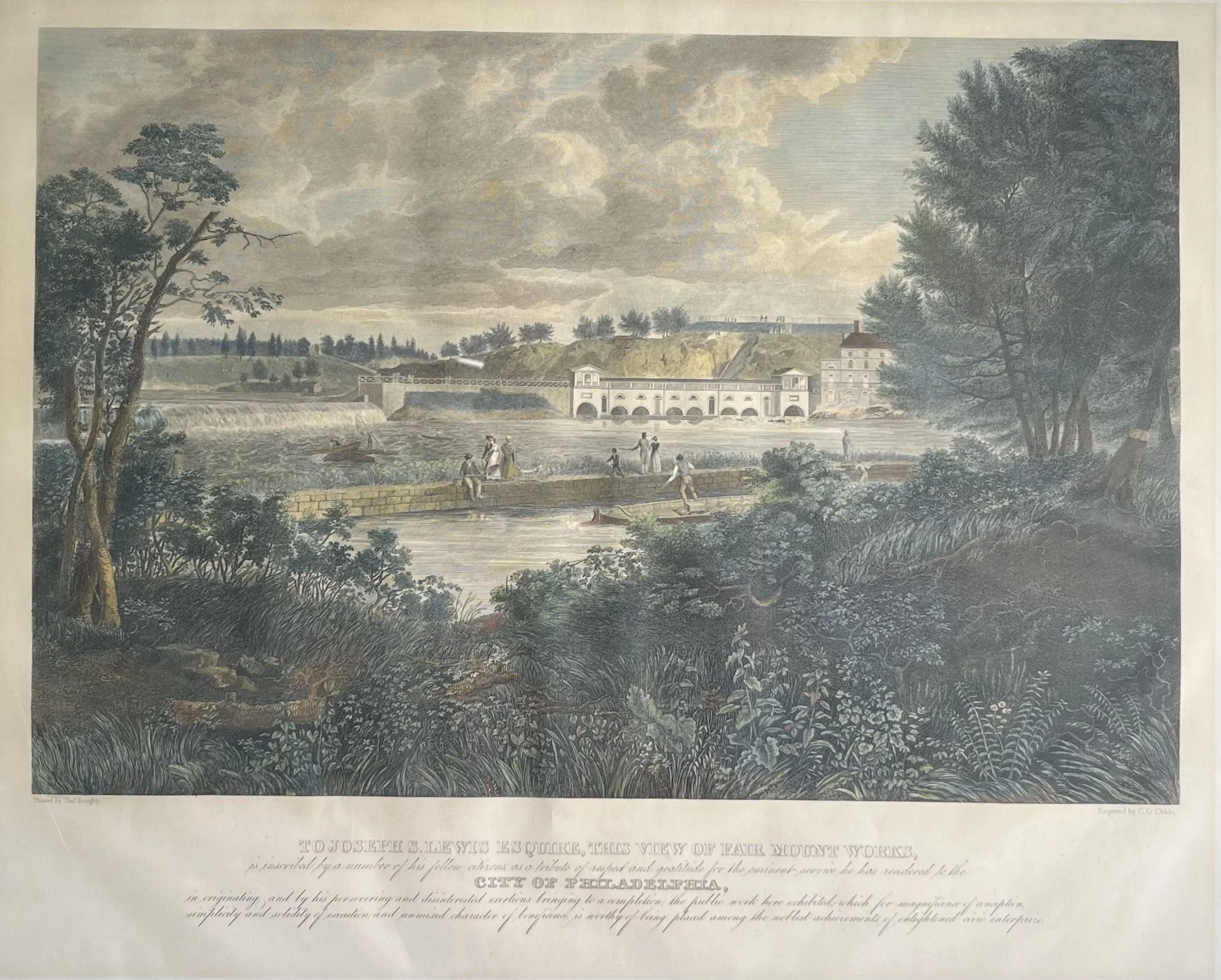
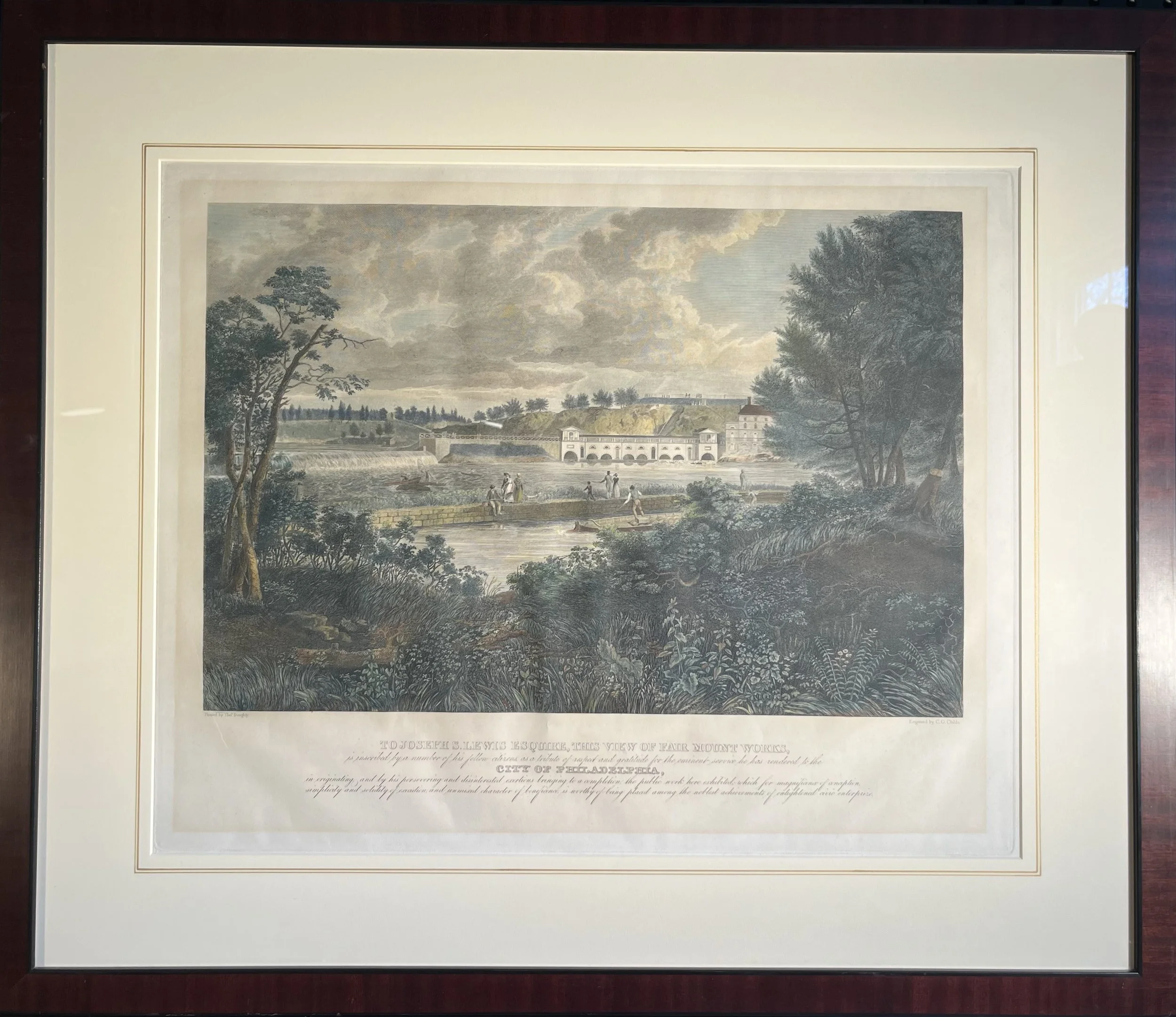
Thomas Doughty. “To Joseph S. Lewis Esquire, This View of Fair Mount Works, is inscribed by a number of his fellow citizens as a tribute of respect and gratitude for the eminent service he has rendered to the City of Philadelphia.” Philadelphia: C. G. Childs, 1828. 13 x 19 1/4. Etching and engraving by C.G. Childs. Original hand coloring. Full margins. Light mat burn and paper toning. Otherwise, excellent condition. Deak: 333; Looney A: p. 132f.; Munsing: 42.
A bucolic view of the Fairmount Waterworks, combining the efforts of two of Philadelphia’s great artists and engravers. Thomas Doughty (1793-1856), a native of Philadelphia, became a professional artist in 1819 against the advise of his friends. He was one of the first American-born artists to devote himself to landscape painting, developing his skills with numerous drawings and paintings of scenes around Philadelphia and elsewhere. His benevolent images became very popular, and his artistic career was a success. Early on, Doughty came into contact with Cephas Childs, one of the city’s most prominent printmakers. Childs, a native of Bucks county, was an expert engraver and publisher, and he later went on to run an important early lithographic firm. Despite his energy, skill and popularity, Childs never made much money from prints, and so in 1834 he abandoned the business to become a newspaper publisher.
Beginning in 1824, Childs engraved several of Doughty’s images of the Fairmount Waterworks, of which this is the finest. The lovely view shows the waterworks from across the Schuylkill River, a vantage point that Doughty used for several paintings of Fairmount. The print includes a dedication to Joseph S. Lewis, a local merchant who provided significant financial support towards the completion of the waterworks. The buildings are depicted shortly after the dam and mill house were added in 1822, and about a year after William Rush’s carved allegorical figures were mounted over the entrances to the mill house. Childs well realizes his subject, emphasizing the picturesque setting and the lush rural surroundings. This print is probably the best example of Child’s engraving ability, which was equal to Doughty’s painterly skills. This separately issued print is one of the most desirable images of this important Philadelphia landmark.